Securing professional pest control services Houston residences need requires addressing the high-moisture bayou ecosystems that accelerate insect reproduction across Harris County. ZephyrShield Exterminators designs multi-tiered perimeter defense systems that halt wood-destroying organisms, invasive German cockroaches, and attic roof rats before they compromise interior wall cavities.
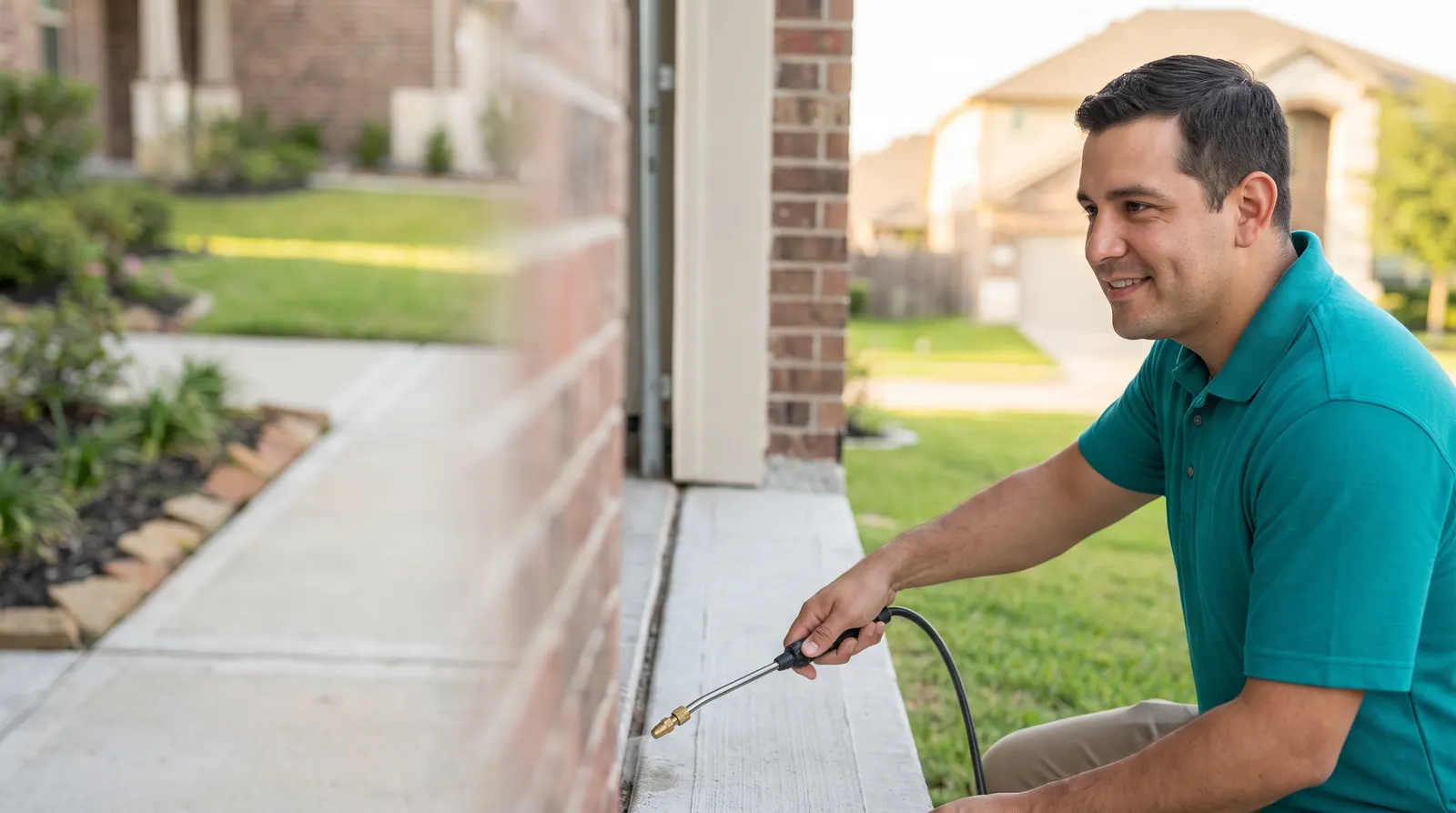
A professional pest control services company in Houston is an environmental defense service that applies non-volatile perimeter treatments, physical exclusion barriers, and micro-targeted bio-rational controls across Gulf Coast properties to arrest biological infestations without saturating living spaces in persistent chemical residues.
Every service reflects the same meticulous attention to detail, whether it's a single job or a larger pest control services project across Houston.
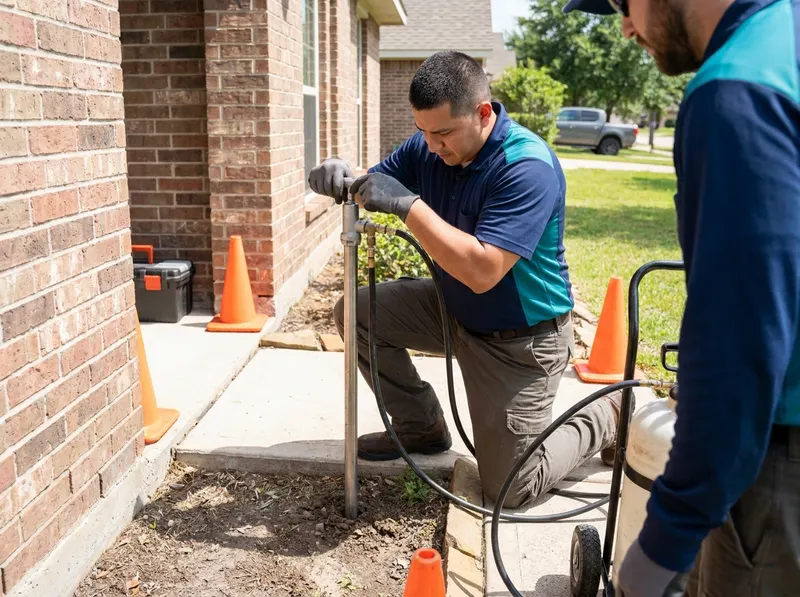
Formosan and native subterranean termites live in underground colonies containing up to several million workers, entering Houston homes through hairline foundation slab fractures as narrow as 1/32 of an inch. Treatment establishes an undetectable liquid barrier along the structural foundation footer using specialized non-repellent termiticides compliant with EPA pesticide safety standards . Soil trenching and deep-rod injections under concrete pads saturate perimeter subterranean access lanes. For comprehensive colony termination, low-profile exterior bait stations containing chitin-synthesis inhibitors can be installed flush to grade at 10-foot intervals around building driplines, preventing structural cellulose consumption throughout active warm-weather foraging phases.
Get a quote →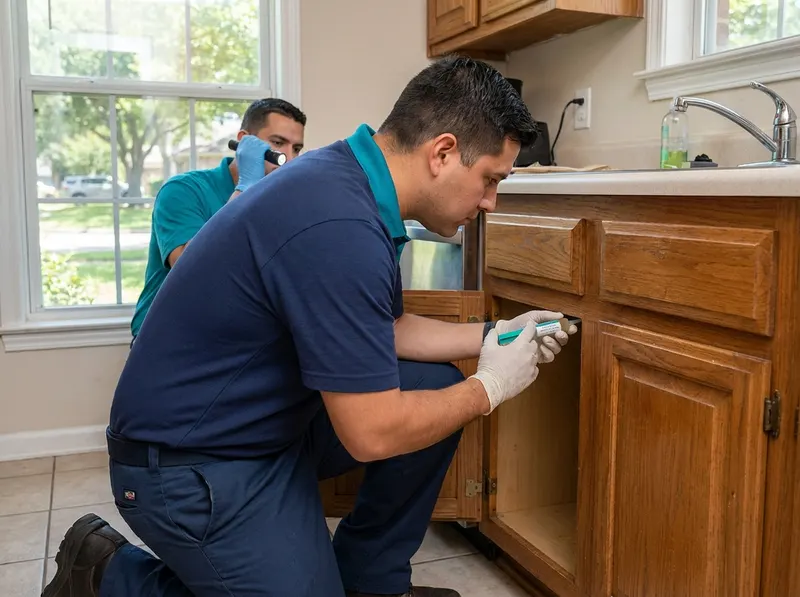
High ambient humidity and mature street canopies drive massive American roaches (often called palmetto bugs) and Smokey Brown cockroaches through plumbing roof vents, brick weep holes, and unsealed perimeter doors. Indoor populations of smaller German cockroaches rapidly colonize warm motor housings behind refrigerators and under sink vanities. Management applies precision bait matrixes containing active ingredients that exploit communal grooming behaviors, paired with insect growth regulators that arrest reproductive molting cycles. Mechanical treatments seal plumbing wall voids and install copper mesh within weep holes to eliminate entry vectors without oversaturating living spaces with volatile hydrocarbon sprays.
Get a quote →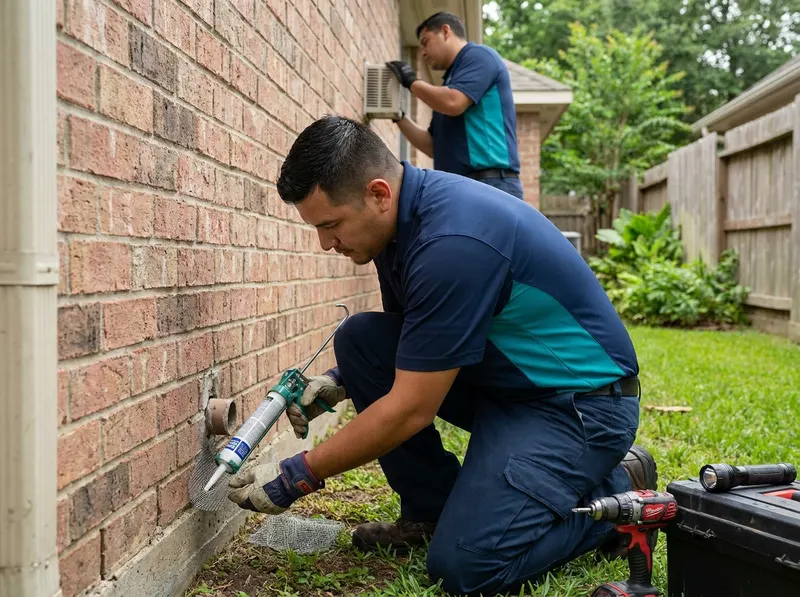
Roof rats (Rattus rattus) exploit overarching oak branches throughout mature neighborhoods to gain direct access to attic soffits, ridge vents, and architectural dormers. Once inside, they gnaw through electrical wiring insulation, soil insulation layers, and harbor dangerous pathogens. Remediation begins with a full thermal and acoustic attic inspection, followed by deploying sealed mechanical snap traps in structured runways. Technicians seal every entry point 1/4-inch or larger using non-chewable 23-gauge galvanized wire mesh, steel wool compounds, and architectural sheet metal flashing, adhering to structural exclusion criteria supported by the CDC rodent control guidelines .
Get a quote →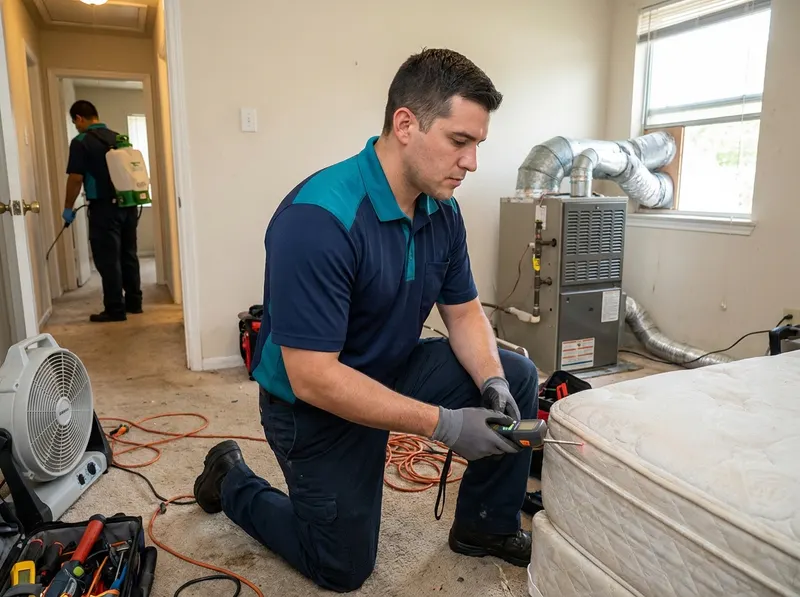
Cimex lectularius populations harbor inside mattress seams, headboard joints, electrical outlet boxes, and baseboard crevices, exhibiting severe resistance to common pyrethroid over-the-counter sprays. Treatment incorporates high-efficiency forced-air thermal convection units that elevate ambient room temperatures to lethal zones between 122°F and 135°F for sustained exposure periods, destroying all developmental stages including desiccation-resistant eggs. Following heat cycles, technicians inject amorphous silica gel desiccant dusts into structural baseboard crevices and wall switch penetrations, creating a long-term non-chemical barrier that absorbs the waxy outer cuticle layer of any traveling nocturnal insects.
Get a quote →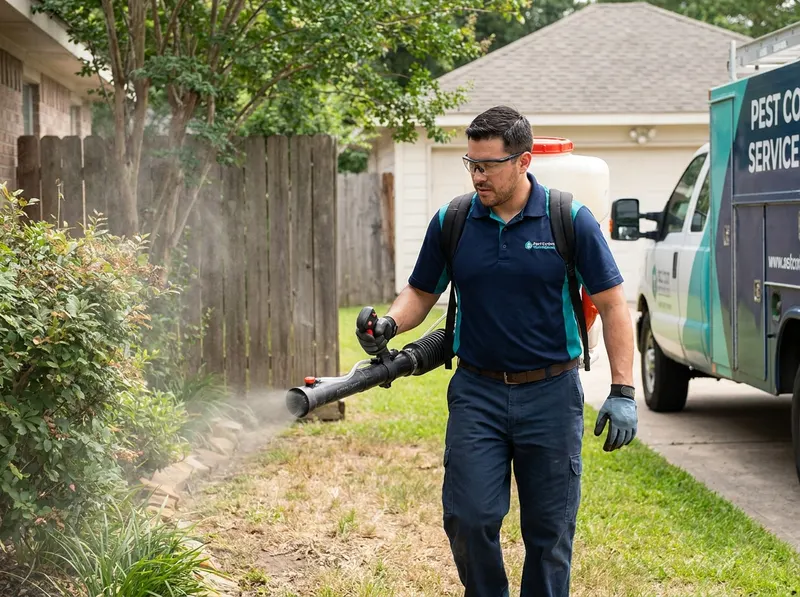
Houston's expansive subtropical bayou drainages and recurrent rainfall create severe breeding habitats for Culex and Aedes mosquito species capable of vectoring viral pathogens. Effective abatement employs multi-tiered microbial larvicides utilizing Bacillus thuringiensis israelensis (BTI) placed directly into standing perimeter storm drains, catch basins, and low-lying perimeter ground cover. Exterior foliage, shaded fence lines, and undersides of broadleaf shrubs receive electrostatic treatments of micro-encapsulated adulticides that bond to plant surfaces through heavy rainfall, suppressing adult landing populations without disrupting beneficial pollinator foraging zones during mid-day hours.
Get a quote →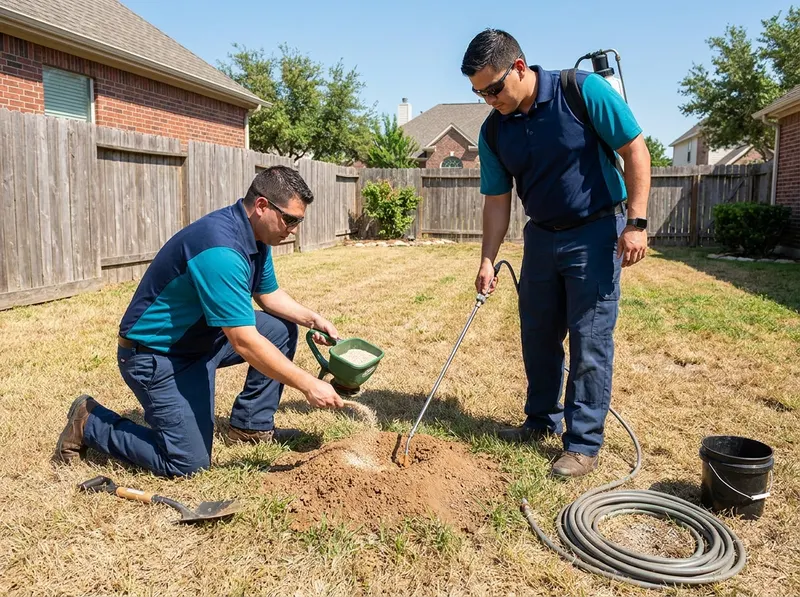
Red imported fire ants (Solenopsis invicta), tawny crazy ants (Nylanderia fulva), and odorous house ants create vast polydomous nest networks across Gulf Coast turf and beneath foundation slabs. Fire ants present venomous sting risks in lawns and electrical junction boxes, while tawny crazy ants short-circuit air conditioning condensers and structural electrical components. Remediation integrates low-toxicity granular biological baits spread across foraging zones, allowing worker ants to transfer slow-acting active ingredients back to multiple subterranean queens, supplemented by targeted liquid perimeter sprays along foundation margins to stop indoor trailing.
Get a quote →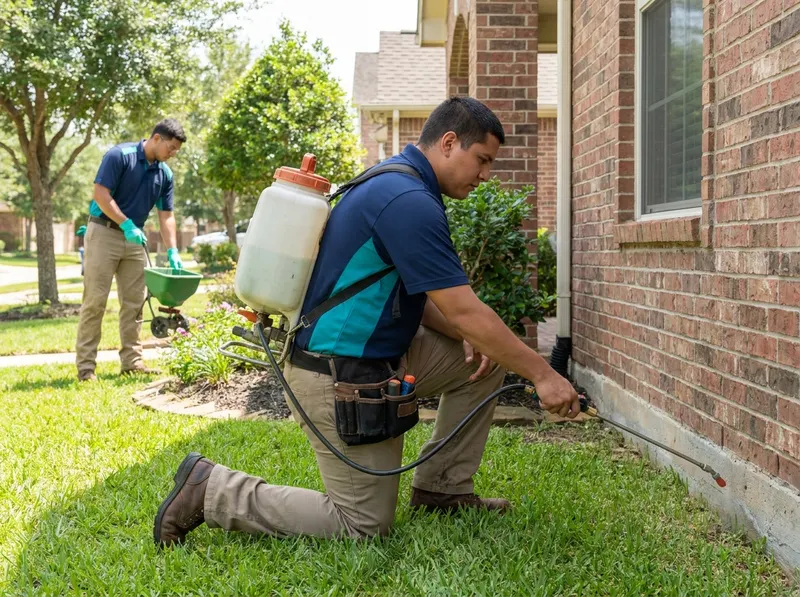
Ctenocephalides felis (cat flea) and Rhipicephalus sanguineus (brown dog tick) proliferate within Houston's sandy loam soils and humid underbrush, carried onto residential grounds by urban wildlife like opossums and raccoons. Once introduced, flea pupae can remain dormant inside carpeting and floorboard gaps for months before human or animal vibrations trigger mass emergence. Treatment applies dual-action formulations containing an adulticide for immediate knockdown and an insect growth regulator like pyriproxyfen to stop egg hatching, combined with thorough exterior turf washes targeting shaded microclimates where pets and wildlife bed down.
Get a quote →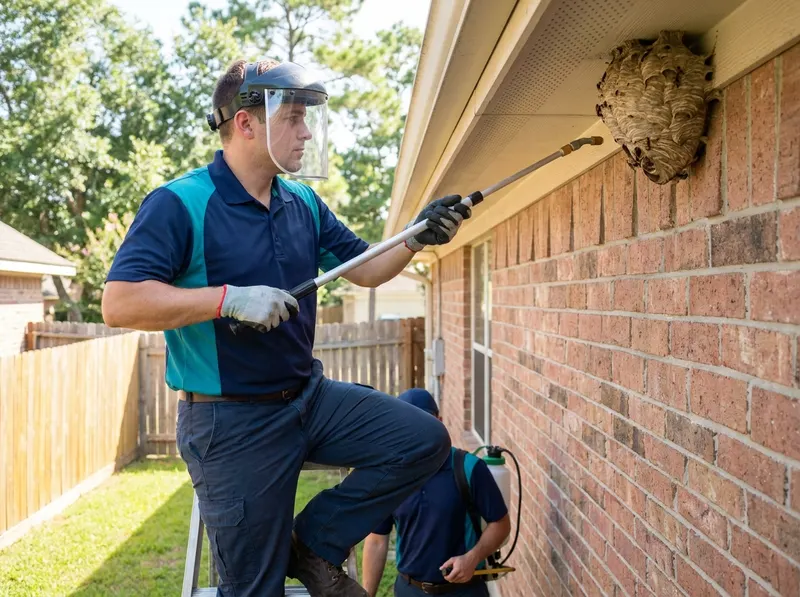
Paper wasps, red wasps, and yellowjackets construct umbrella-shaped carton nests beneath roof eaves, fascia boards, second-story window ledges, and inside utility meters. Territorial stinging insects present severe allergic health hazards to occupants and service contractors. Technicians utilize insulated non-conductive carbon-fiber extension poles to deliver targeted aerosolized freezing agents or botanical pyrethrins directly into comb chambers from ground distance, neutralizing guard wasps instantly before physically removing the nest structure and treating the anchor substrate with residual repellents to deter future seasonal reconstruction.
Get a quote →You get a firm, itemized quote for your pest control services before any work begins, no surprises, no pressure.
Careful prep, tidy work, and a full cleanup when we are done. We treat your home and belongings like our own.
The same trusted, background-checked team from the first call to the final check.
Selecting appropriate structural remediation depends on pest biology, harborage depth, and seasonal moisture vectors across Gulf Coast foundations. If you want immediate eradication of interior German cockroach infestations in high-humidity zones like kitchens and utility rooms, choose targeted juvenile hormone regulators (IGRs) combined with non-repellent micro-encapsulated baits; if you want preventative property protection against migrating outdoor roaches and perimeter invaders, choose an engineered exterior environmental barrier. The trade-off is interior bait placement requires a 14-day clearance interval for complete nymph egg cycle disruption, whereas exterior liquid perimeter treatments protect structural margins immediately but do not address insects already nesting behind finished drywall.
If structural wood shows presence of native subterranean termites, choose continuous non-repellent termiticide soil barrier trenching along foundation footings; if treating drywood termite colonies isolated inside attic rafters, choose localized micro-injections or targeted borate structural wood saturations. Soil trenching provides comprehensive subterranean colony protection for up to ten years, whereas localized attic spot injections resolve immediate localized activity without treating subterranean approach vectors.
Every project gets a firm, written price after a free on-site visit. Ranges below for orientation.
Tell us about your pest control services job and we'll send a clear, written quote, usually the same day. Or just call and talk to a real Houston pro.
(107) 407-7064
Houston properties face acute pest pressures driven by sticky subtropical humidity and alluvial soil geography alongside major waterways like Buffalo Bayou and White Oak Bayou. Expansive vertisol clay soils characteristic of Harris County shrink and swell across wet and dry cycles, creating deep foundation fissures through which subterranean termites bypass external slab barriers. Older pier-and-beam cottages across The Heights and Montrose feature high-clearance crawlspaces that collect seasonal moisture, creating microclimates where wood-boring beetles, subterranean termites, and damp-loving American roaches thrive. Meanwhile, expansive sprawling live oaks throughout River Oaks, Memorial, and West University Place create direct aerial superhighways for roof rats seeking attic entry points above masonry weep lines.
Free estimates for Houston & the surrounding area.
For standards, safe disposal, and service guidance on pest control services in Houston, TX, useful references include U.S. EPA, ENERGY STAR, U.S. Dept. of Energy, Consumer.gov, U.S. Census Bureau, and Google Maps. General consumer and small-business resources are available from USA.gov, Better Business Bureau, FTC Consumer Advice, U.S. Small Business Administration, and Ready.gov.
 ZephyrShield Exterminators